Record Spending and a Split Money Trail Define This Midterm
While Republican committees dominate total ad spend, Democrats hold an edge at the candidate level in key southern races.
By Tariq Carter ·
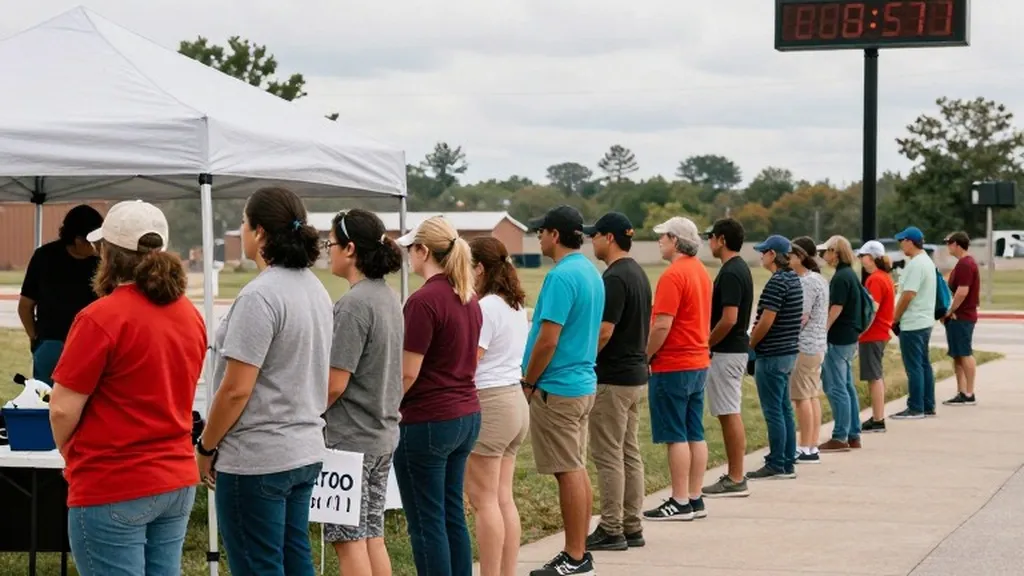
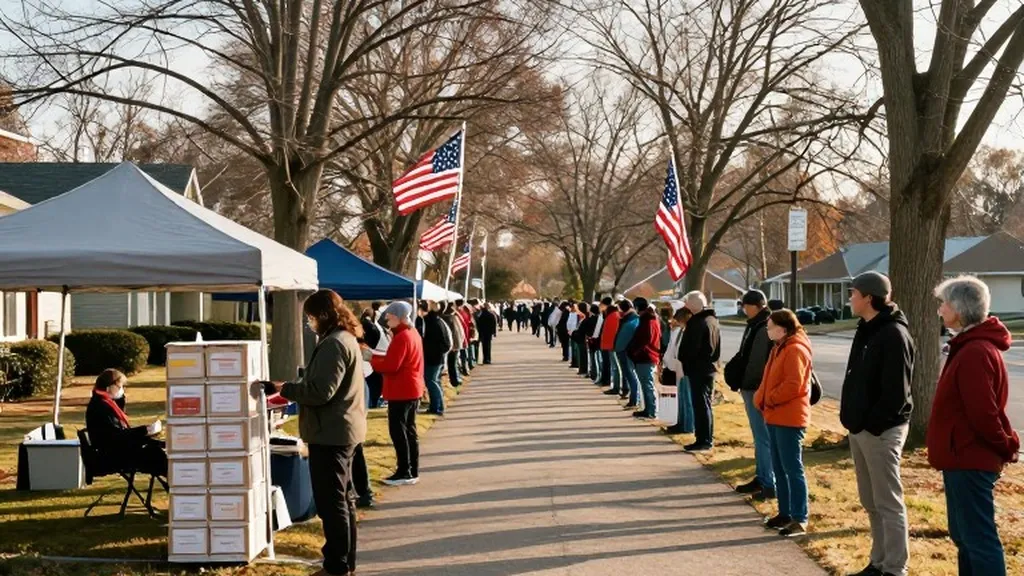
Voters in Texas, Oklahoma, Louisiana, and Arkansas are heading to the polls on a Tuesday marked by a historic financial footprint. The 2026 midterm elections are shaping up to be the most expensive in history, a fact that is reshaping the strategic landscape for both parties. The Associated Press notes that while the total price tag is breaking records, the distribution of that money reveals a complex dynamic that could influence outcomes in critical swing states.
A significant portion of the campaign funding has been channeled through national committees rather than individual candidate campaigns. According to AP analysis of AdImpact data, Republican committees outraised and outspent their Democratic counterparts. This advantage was bolstered by contributions from Trump-affiliated groups and prominent figures such as Elon Musk. These super PACs and party committees have poured resources into the race, creating a high-volume media environment that has saturated airwaves in competitive districts.
However, the flow of money at the candidate level tells a different story. Democrats have managed to outraise their Republican opponents when looking strictly at funds raised by the candidates themselves. This candidate-level edge provides Democratic nominees with a crucial buffer for local advertising and ground game operations. It allows them to compete effectively in specific districts even when facing a larger national war chest from the Republican side.
The strategy behind the Republican spending is highly targeted. An AP analysis found that 88.1 percent of Republican general election television ad spending went to states and districts that Donald Trump won in 2024. This heavy concentration of funds is a defensive move, aiming to solidify support in areas where the Republican base is strongest. The goal is to prevent upsets in districts where the president's margin of victory was significant.
Within that 88.1 percent figure, a staggering amount of money was deployed in deep red territory. More than 850 million dollars in Republican TV ad spending went to districts where Trump won by 10 points or more in the previous presidential election. This saturation of advertising in safe seats serves two purposes: it drives turnout among loyal Republicans and it signals to Democrats that these districts are not to be taken lightly. It is a financial statement of intent to hold the line in the South Central region and beyond.
For Democrats, the financial strategy has focused on protecting their existing seats and making inroads in competitive districts. The party faces a challenging arithmetic in the House, where they need a net gain of three seats to achieve a majority. Currently, Democrats hold 214 seats, while Republicans hold 218. This margin is tight, and the cost of defending these seats is high. The Democratic candidate-level fundraising advantage is seen as a vital tool to offset the heavier committee-level spending by Republicans.
In Texas, the financial stakes are particularly high. The state is using a new congressional map following mid-decade redistricting, which has drawn significant attention from both parties. The Senate race is an open seat, with Republican Attorney General Ken Paxton facing Democrat James Talarico. Trump backed Paxton over incumbent Senator John Cornyn in the primary, a move that has complicated the financial and strategic dynamics of the race. The governor's race also remains competitive, with incumbent Greg Abbott facing challenges from a well-funded opposition.
Oklahoma presents a similar scenario with an open Senate seat and an open governor's race. The state's polls are open from 7 a.m. to 7 p.m., and voters are weighing a ballot that includes these high-profile contests. The financial energy in the state reflects the broader national trend, with both parties pouring resources into what is expected to be a close contest. The new congressional maps in Texas and other states like Florida and North Carolina are adding another layer of complexity to the spending strategy.
Louisiana and Arkansas join this group of South Central states with open or contested Senate seats. In Louisiana, there is no governor's race this cycle, but the Senate contest is a focal point. Polls in the state open at 6 a.m. for Tuesday elections. In Arkansas, incumbent Senator Tom Cotton is on the ballot, as is incumbent Governor Sarah Huckabee Sanders. The financial battles in these states are part of the broader fight for Senate control, where Democrats need a net gain of four seats to take the majority.
The disparity between committee-level spending and candidate-level fundraising is a defining feature of this election cycle. Republicans are leaning on the sheer volume of money deployed by national groups to create a dominant presence in the media. Democrats are relying on the efficiency of their candidate-level fundraising to stay competitive in local markets. This split in the money trail is a testament to the evolving nature of campaign finance in the digital age, where national groups and local candidates often operate in parallel financial tracks.
As polls close across the region, the impact of this record spending will be measured in the final vote counts. The 850 million dollars spent in deep red districts and the 88.1 percent concentration of Republican ads are clear indicators of a party focused on defense. Meanwhile, the Democratic candidate-level edge suggests a strategy of targeted offense in competitive areas. The result will be a referendum on the effectiveness of these two distinct financial approaches in one of the most expensive elections in history.