Trump's Iran War Costs Voters $4 Gas and GOP Midterm Hopes
The conflict has entered its eighth month, with national pump prices staying above $4 since June as Republicans struggle to explain the delay to voters.
By Tariq Carter ·
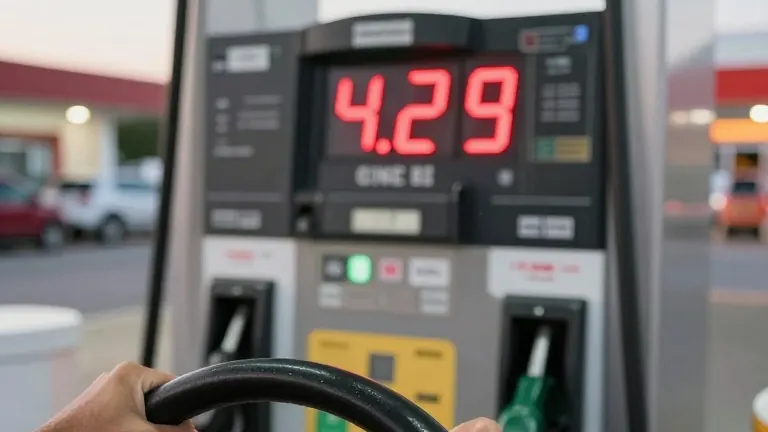
The national average for a gallon of gasoline has hovered above four dollars since mid-June, a figure that now anchors the economic anxiety of millions of American drivers. This price tag marks four consecutive months of elevated costs, a direct result of a conflict that President Donald Trump initially described as a short-lived intervention. The war against Iran, which Trump has frequently called a "little detour," has dragged on for nearly eight months. It has transformed from a military campaign into a central political issue for the Republican Party ahead of the November 3 elections.
Voters are connecting the conflict to their daily bills. Noor Dubow, a 44-year-old dispatcher at a trucking logistics firm in Columbus, Ohio, said he usually supports Republicans for economic reasons. However, the surge in fuel prices has pushed him toward Democrats this cycle. Dubow, who monitors the disruption to his industry, questioned why members of his party were not holding the president accountable for the ongoing spending.
The economic pressure extends beyond gasoline. Diesel prices remain near record highs, creating difficulties for Republican candidates in traditionally conservative states like Iowa, Kansas, Ohio, and Texas. These states currently feature competitive races where Democrats are gaining ground. The conflict has also widened, with Iran-backed Houthi rebels attacking Saudi oil infrastructure and airports. The State Department announced over the weekend that it is reducing staff at four U.S. embassies in the Middle East after intelligence indicated Iran is targeting American personnel.
Republican strategists have warned for months that the war is damaging the party's ability to keep Congress. An AP-NORC poll published last week showed that voters from both major parties want the next Congress to prioritize affordability and end the war. Despite this, Trump has downplayed the economic impact. At a recent rally in Michigan, he told supporters that the price increase was a small cost for removing a nuclear threat. He argued that he expected prices to be double or triple what they are now.
The president's messaging has created a difficult position for his candidates. Christopher Borick, director of the Lehigh University Opinion Observatory, noted that Trump's claims are resonating with a shrinking portion of the electorate. Many Republican voters admit the high costs are testing their patience. Clay Coey, a 59-year-old auctioneer from DeWitt, Michigan, said he cringes when filling his 2010 Chrysler Sebring. Yet, he remains willing to pay the premium to eliminate a security threat, though he questions the long-term value.
The war has also tested the loyalty of Trump's base. Some supporters view the conflict as a betrayal of the "America First" pledge to avoid endless wars. Sean O'Brien, a 21-year-old student at Auburn University in Alabama, said the decision left him disillusioned. He expects to vote for a Democrat in November, marking a shift from his previous independent leanings toward the right. For O'Brien, the timeline Trump set at the start of the war, which he predicted would last weeks, no longer matches the reality on the ground.
The conflict's duration has become a source of internal friction within the GOP. Five Republican strategists told The Associated Press in early summer that they saw warning signs the war could hurt candidates if it did not wind down quickly. An interim ceasefire forged in June unraveled within weeks. Oil prices peaked in May, dipped in June, and surged again in September as Trump threatened to escalate. Internal polling now suggests that voters are tying the war to higher grocery and travel costs, a narrative that contradicts the White House's claim that the economic impact is a temporary inconvenience.
Source: ABC News