Trump pushes AI giants to share energy profits with local grids
The President is urging hyperscalers to offset rising utility bills by selling excess power to nearby residents.
By Aminata Patterson ·
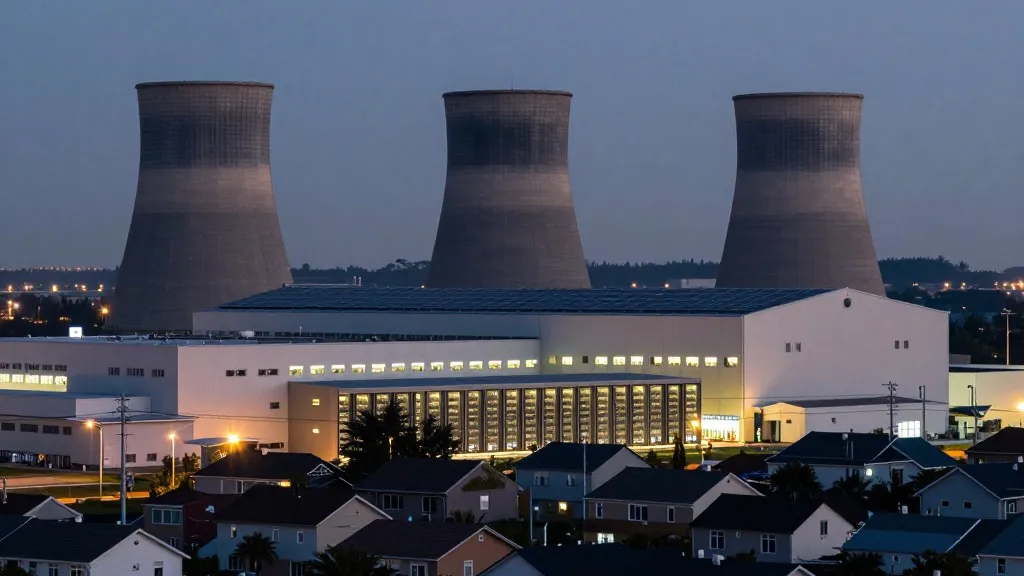
The tension between expanding artificial intelligence infrastructure and local economic stability has reached a new peak as President Donald Trump proposed a direct financial link between data center operators and the communities surrounding them. In a move designed to mitigate public backlash, the administration is pressing AI hyperscalers to distribute energy dividends to local residents. The core of the proposal is straightforward: by allowing data centers to sell or give back excess electricity, the aim is to lower utility costs for nearby households, potentially reversing recent price hikes caused by the sector's voracious power appetite.
This initiative follows a period of intense friction between tech developers and small towns. Communities across the United States have increasingly organized protests against data center construction, citing a litany of grievances. These include significant spikes in electricity bills, persistent noise pollution, and strains on local water supplies. Additional concerns have emerged regarding air quality, deforestation, and the general ecological footprint of these massive facilities. The administration’s strategy is to make the presence of these data centers more palatable by offering a tangible economic benefit to the affected population.
The proposal builds on existing directives that require data center builders to generate their own electricity. Trump’s latest post on Truth Social expands on this requirement, suggesting that the surplus power generated should not be wasted but instead channeled back into the local grid. The administration is keen to maintain its lead in the global AI race against China, and this energy dividend is viewed as a mechanism to win back public favor. By directly addressing the pain point of rising household energy costs, the government hopes to secure the necessary social license for continued expansion.
The practical mechanics of this dividend remain under discussion, but the focus is heavily on electricity. A recently passed act already mandates that data centers shoulder the cost of grid upgrades, preventing these expenses from being passed on to local taxpayers. The new energy dividend could complement this by using excess generation to further reduce local bills. This approach aligns with the administration's broader goal of making data centers a net positive for local economies rather than a drain on community resources.
In his post, Trump emphasized the financial incentives for both parties. He noted that data centers, which were often viewed with skepticism in certain areas, have become highly popular once a financial deal was struck. His message to industry leaders was blunt: make deals to get these facilities built. The administration believes that a structured energy-sharing agreement can transform a hostile environment into a collaborative one, accelerating the pace of construction.
However, the economic logic behind the term 'dividend' raises questions among market observers. Traditionally, dividends are paid out from profits, yet many new data center builds are still in the capital-intensive construction phase, where costs must be recouped before profitability is achieved. Critics argue that calling these payments dividends may be premature, as the companies are still in the investment cycle. Furthermore, the short-term power generation methods employed by these facilities often rely on gas-powered generators, which are efficient but noisy and polluting, potentially undermining the local quality of life that the dividend aims to improve.
Skeptics also point out that the energy dividend addresses only one facet of a broader problem. While lowering electricity bills is a significant benefit, it does not resolve issues related to water consumption, ecological damage, or pollution. These non-economic factors remain major challenges in convincing local stakeholders to support new projects. The administration’s plan may need to evolve beyond simple energy sharing to address these environmental concerns fully.
The next steps will likely involve detailed negotiations between hyperscalers and local municipalities to define the terms of these energy deals. The success of this mandate will depend on whether the financial benefits are substantial enough to outweigh the operational disruptions caused by data center expansion. As the AI arms race intensifies, the relationship between tech giants and local communities will become a critical factor in determining the speed and scale of future infrastructure development.
For now, the administration is banking on the idea that shared energy costs can serve as a bridge to broader acceptance. Whether this model will hold up under the scrutiny of local residents and industry executives remains to be seen. The coming months will test the viability of this energy dividend approach as a tool for balancing technological progress with community welfare.
Source: Tom's Hardware · original report published
More Business · Rip-Off Report · Report a business · Got a Story?