Spain: Transport Minister Steps Down After Fatal Train Crash
The resignation comes six days after a collision in southern Madrid killed at least 69 people, marking the second major accident on the high-speed network this year.
By Aminata Patterson ·
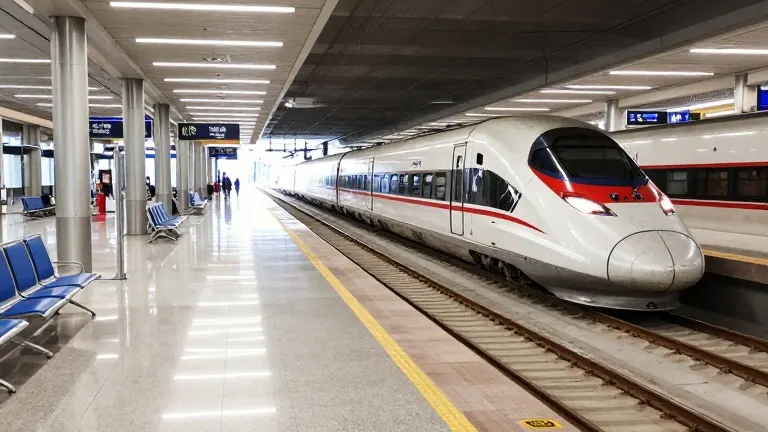
Óscar Puente, the Spanish minister for Transport and Sustainable Mobility, announced on Tuesday that he will leave his post. The decision follows a collision between two high-speed trains in southern Madrid that killed at least 69 people on October 28.
Puente disclosed the news near the end of a multi-hour appearance before a parliamentary committee. He cited political dignity and empathy for the victims as the primary reasons for his departure. The minister stated that a transport chief in a country like Spain cannot remain in office after two accidents of such gravity in less than a year.
The October 28 incident occurred on the Madrid-Sevilla line when a moving train struck another that was stopped on the tracks. The sequence began with a critical failure in the communication system, which is essential for the line's safety infrastructure. Madrid-based controllers assumed control of the situation and authorized one train to proceed despite the presence of a stationary train ahead.
This event marks the second major collision on the Madrid-Sevilla route in 2026. In January, a train derailed more than two hours south of Madrid and collided with an oncoming service, killing 46 people. That earlier incident remains under investigation.
The high-speed rail network, the second largest in the world after China, had not suffered a fatal accident in over 30 years of operation until this year. The recent crash has intensified scrutiny of the system's safety protocols, occurring just four weeks before national elections.
Alongside his resignation, Puente announced additional safety measures for the rail network. These include upgrades to the conditions of control centers and an accelerated rollout of the European Rail Traffic Management System. The new system standardizes safety and signaling across the network.
Source: WTMO-CD