Spain Transport Minister Refuses to Resign After 69 Die in High-Speed Train Crash
Investigators found the moving train was traveling at speeds between 160 and 200 km/h when it struck a stationary vehicle near Toledo.
By Rosa Kovalenko ·
Oscar Puente, the Spanish transport minister, stated on Friday that he will remain in his position following the high-speed rail collision that killed at least 69 people. Speaking at a news conference in Madrid, Puente rejected calls for his resignation while affirming the government's commitment to determining the cause of the disaster. He described his current duty as resolving the issue rather than debating his leadership.
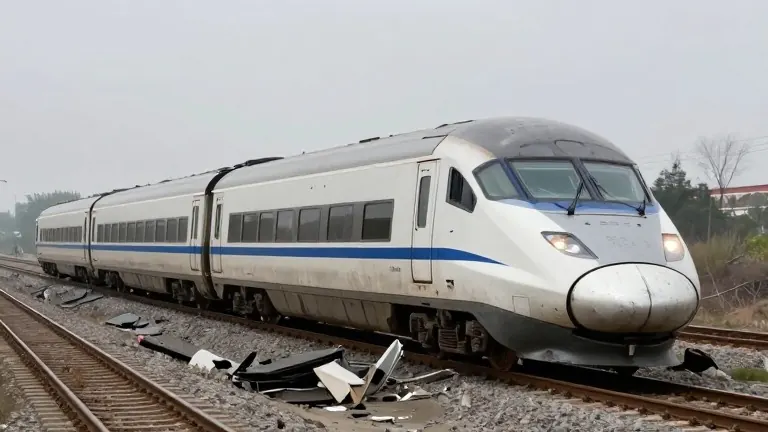
The accident occurred on Wednesday morning near the town of Urda in central Toledo province. A state-operated Renfe high-speed train struck the rear of a stationary train operated by the Iryo company. Investigators released a preliminary report on Thursday evening stating that the Renfe train was traveling between 160 km/h and 200 km/h at the time of the impact. The force of the collision caused the front carriage of the moving train to become embedded in the tail of the stopped vehicle.
Puente indicated on Wednesday that a computer failure around 08:30 triggered the initial halt of six moving trains, including the two involved in the crash. Leaked audio recordings published in Spanish media show communications between train drivers and Madrid's control center in the minutes before the collision. The recordings suggest that one high-speed train received clearance to move despite another train having stalled approximately 25 km ahead. Puente described the decision to resume movement without speed restrictions as inexplicable.
Political pressure for Puente to step down has intensified since the crash. Demonstrators gathered outside the transport ministry on Wednesday night, and the trade union CSIF joined the conservative People's Party in calling for his resignation. Puente addressed these demands on Friday, stating that leaving would be the easy choice but did not fit his character. He noted that Prime Minister Pedro Sanchez had asked him to stay.
Sanchez told reporters earlier on Friday that public trust in Spain's high-speed rail network had been broken. He described it as unacceptable that two similar tragedies occurred within a single year. In January, a collision on the same Madrid-Seville route killed 46 people in Adamuz in southern Spain. Wednesday's incident marks Spain's worst rail crash since 2013 and ranks among the worst in Europe's modern history.
Irene Montero, the prime ministerial candidate for the left-wing Podemos party, argued that responsibility should not fall on a single worker. She noted that experts have warned for years against the liberalization of the railway sector. Alberto Ibanez, a member of Congress for the Sumar platform, called the leak of the audio recordings despicable. Puente said on Friday that he would not use any worker as a shield but would examine the questions raised by the tragedy one by one. He added that the government would act in consequence if the investigation found human error.
Spain is observing three days of national mourning. Families of victims and survivors are grappling with the events that led to the collision. Puente expressed immense pain and sadness for the victims and their relatives. He stated that this pain must not paralyze the government as it seeks solutions to the problem.
Source: BBC News