Tesla Writes Off Australian Cybertruck Reservations After Seven-Year Wait
The automaker has voided thousands of pre-orders in Australia and New Zealand, refunding deposits after determining that demand does not justify the cost of right-hand-drive production.
By Tariq Carter ·
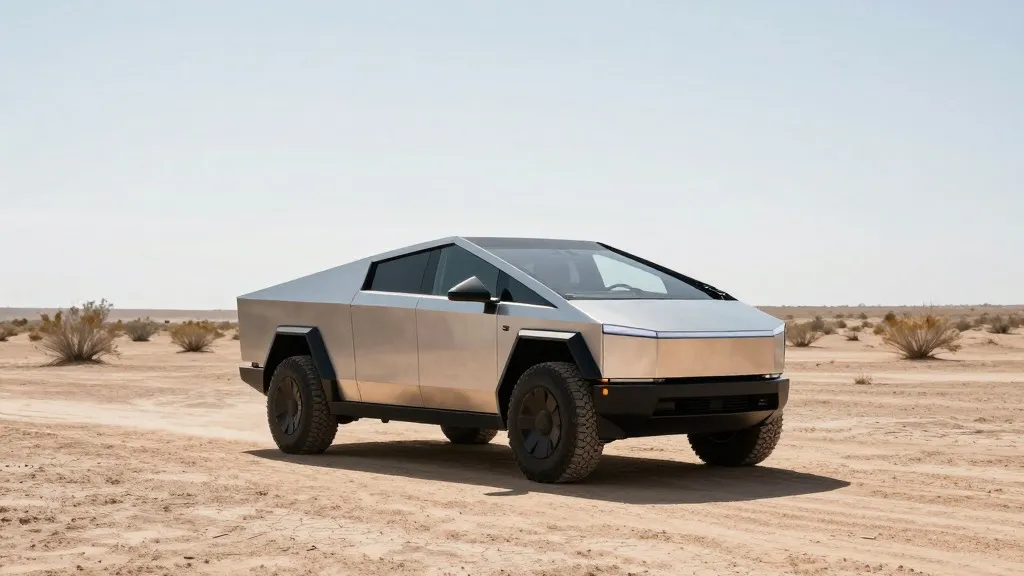
Tesla has formally terminated its plans to sell the Cybertruck in Australia and New Zealand, a decision that concludes a seven-year cycle of customer anticipation for the electric pickup. The company sent notifications to reservation holders today, confirming that their orders are no longer valid and that all associated deposits will be refunded. This move signals a significant strategic pivot, as the automaker effectively abandons two key markets that require right-hand-drive vehicles, opting instead to focus its international expansion on left-hand-drive territories.
The financial implications for early adopters are minimal, as Tesla is processing full refunds for payments made within a 30-day window. To incentivize continued loyalty, the company is offering a complimentary one-year subscription to its Full Self-Driving (Supervised) software for customers who switch their orders to a new Model 3 or Model Y. This strategy aims to convert stalled pickup truck reservations into sales of sedans and SUVs that Tesla can already produce and ship efficiently to these regions.
The cancellation arrives just one day after Tesla released its third-quarter 2026 earnings report, highlighting the pressure the company faces to optimize its global product lineup. Australian customers began reserving the vehicle in November 2019 with a A$150 deposit, creating a large pool of potential buyers that represented roughly 3% of all global reservations at the time. While Tesla never officially confirmed regional totals, crowdsourced data suggested total global reservations peaked at approximately 2 million units by 2023.
The path to this decision has been marked by prolonged delays and shifting corporate communications. In May 2022, Tesla quietly removed the Australian reservation page, replacing it with a generic update notification button without refunding customers. In 2024, the company shipped a unit to Australia for a display tour, and CEO Elon Musk told shareholders that certification for other markets might occur "sometime next year." However, the right-hand-drive version never materialized, leaving local buyers waiting while the domestic US market faced its own challenges.
The primary obstacle has been the engineering cost required to adapt the Cybertruck for right-hand-drive markets. Australia and New Zealand, along with the UK and Japan, require vehicles with steering wheels on the right side. Australia additionally mandates specific design certifications, creating a substantial upfront investment for a truck that is currently facing softening demand in North America. Tesla’s recent international launches have exclusively targeted left-hand-drive countries, including South Korea, the UAE, Saudi Arabia, Qatar, Jordan, and Israel, while the vehicle remains blocked in the EU due to pedestrian safety regulations.
Market data suggests the economics of a right-hand-drive program are difficult to justify. Tesla reported delivering 8,295 units in the "Other Models" category during Q3 2026, a segment that now consists almost entirely of Cybertrucks since the Model S and Model X production lines have closed. Estimates place Cybertruck sales for the quarter between 7,000 and 8,000 units, equating to an annual pace of roughly 30,000 vehicles. This figure is significantly lower than the production line’s capacity of 250,000 units per year, making it unlikely that a chief financial officer would approve the re-engineering costs for a combined market of approximately 33 million people.
The decision reflects a broader reality that the Cybertruck is evolving into a niche product with a predominantly American customer base. While some Australian reservation holders may have already cancelled their pre-orders, the official termination provides clarity for those who remained. The truck’s current market position is complicated by price increases and range adjustments since its initial launch, further reducing the appeal of importing a premium vehicle to a market where value for money is a key consideration.
Looking ahead, Tesla is likely to prioritize international sales of its existing left-hand-drive inventory rather than expanding the Cybertruck’s footprint into new regulatory frameworks. The company’s focus appears to be on finding buyers for the units it can already produce, rather than investing in new production capabilities for a vehicle that is no longer a global volume driver. For Australian and New Zealand consumers, the wait for a right-hand-drive Cybertruck is now officially over, at least for the foreseeable future.
This development underscores the risks of long-term reservations in the electric vehicle sector, where product specifications and market strategies can shift significantly over several years. While the refund process mitigates the financial loss for customers, the experience highlights the importance of clear communication from manufacturers regarding long-term product roadmaps. Tesla’s move to consolidate its international efforts around left-hand-drive models suggests a more cautious approach to global expansion in the coming quarters.
Source: Electrek · original report published
More Business · Rip-Off Report · Report a business · Got a Story?