Tesla Optimus Delivery Pushed to Late 2027
Musk cites unresolved mechanical and software hurdles as Tesla extends the timeline for external humanoid robot sales.
By Mykola Bondarenko ·
Tesla has officially extended the timeline for delivering its Optimus humanoid robots to outside customers, a move that underscores the persistent technical hurdles facing the industry. During the company’s third-quarter 2026 earnings call, Chief Executive Officer Elon Musk announced that external shipments are now targeted for the end of 2027. This delay reflects ongoing challenges in the robot’s electromechanical design, artificial intelligence capabilities, and overall durability, issues that remain central to the development of general-purpose humanoids.
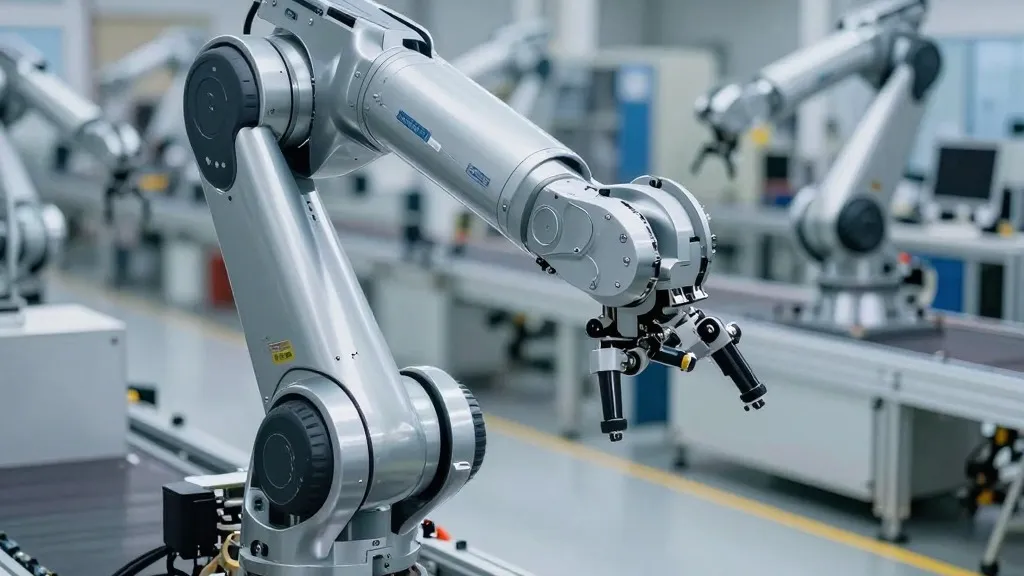
The production infrastructure is already in place, with early manufacturing underway on Tesla’s high-volume line in Fremont, California. This facility, previously used for Model S and Model X production, has most of its equipment installed to support a theoretical annual capacity of one million units. However, Musk acknowledged that reaching a weekly output of approximately 20,000 robots will take at least another year, or potentially longer, as the design continues to evolve.
The primary technical obstacle identified by Tesla engineers is the robot’s hand. Musk explained that the fingers must be soft enough to manipulate delicate objects yet durable enough to withstand constant wear, a challenge compounded by the fact that robots cannot heal like human skin. Alongside the hand, custom gears present reliability concerns. On the software side, Tesla is still refining its AI architecture. Lacking a large fleet of robots to generate real-world data, the company plans to deploy 10,000 to 20,000 units in an 'Optimus Academy' to practice tasks. The AI5 chip is also scheduled for integration around April 2027.
Musk stated that external deliveries will initially focus on industrial tasks that are dangerous, repetitive, or require around-the-clock operation. He promised a video demonstration within one to two months showing the robot performing unscripted tasks, aiming to distinguish Optimus from competitors whose demos often rely on pre-programmed routines. The company’s recent shareholder letter describes the current output as the first 'production-quality' bots, implying that previous units were not yet suitable for commercial release.
This timeline shift follows a series of previous delays. In 2024, Tesla suggested internal use in 2025 and high-volume external sales in 2026. By early 2025, Musk had projected the construction of 10,000 robots, with thousands performing useful work by year’s end, a goal he later admitted was not met. The most recent reports indicate that while production has ramped to hundreds of units per week, the robots have struggled to generalize to new tasks, with the hand and forearm assemblies involving over 100 parts and touch sensors facing reliability issues.
Competitors are advancing on similar timelines, challenging Tesla’s assertion that no other company is close to developing a general-purpose humanoid. XPeng activated an automated production line for its IRON robot in Guangzhou in September, with over 80% of core processes automated. XPeng aims for mass production by the end of 2026 and deliveries in the first half of 2027, targeting retail environments before a European rollout later that year. Like Tesla, XPeng has yet to ship a paying customer but maintains a comparable delivery schedule.
Boston Dynamics, a subsidiary of Hyundai, has taken a different approach by prioritizing industrial utility over human-like dexterity. The company began producing its electric Atlas robot in January and has already committed all 2026 deployments, including to Google DeepMind. In September, Boston Dynamics opened a training center at Hyundai’s Metaplant in Georgia, where Atlas is learning to sequence car parts. Hyundai plans to deploy 25,000 robots across its plants in the coming years. Notably, Boston Dynamics hired Milan Kovac, Tesla’s former head of Optimus, in January, suggesting a transfer of knowledge between the two leading contenders.
The stakes for these companies are high as they seek to establish dominance in a rapidly evolving market. While Tesla may have built the most robots to date, the critical challenge remains making them sufficiently useful and reliable for commercial viability. With electricity rates rising and the demand for automation growing, the ability to deploy functional, unscripted robots will determine which company successfully transitions from prototype to industry standard. The upcoming video demonstration from Tesla will serve as a key indicator of whether the late-2027 target is realistic or merely another step in a long pattern of delays.
Source: Electrek