EU approves first direct undersea cable link to Greenland
The new Pan-Arctic Cable aims to reduce Europe's dependence on the Red Sea and the United States for global internet connectivity.
By Tariq Carter ·
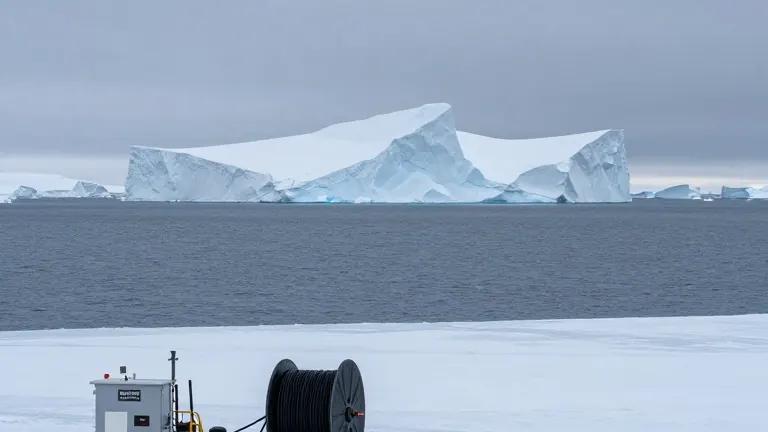
European internet users may soon see a new route for their data traffic as the European Union moves to build the first undersea cable directly connecting the continent to Greenland. The project, known as the Pan-Arctic Cable, is designed to link Greenland straight to the EU, creating a digital corridor that bypasses traditional North American infrastructure.
The European Commission outlined the plan in a joint communication released on October 20, 2026. The document labels the initiative a flagship project of a new Arctic strategy. It calls for a sovereign, secure, and resilient submarine connection. The text also suggests that Canada could serve as a stepping stone for future cable expansions toward Asia.
Elisabeth Braw, a senior fellow at the Atlantic Council, noted the shift in global priorities. She told Ars Technica that the idea would have seemed commercially unattractive five years ago. "But the fact that it’s being considered is very much on trend and a sign of our times," Braw said. Her assessment reflects a wider move to diversify digital infrastructure.
Political tensions have accelerated the project's development. The plan gained official backing after a trilateral security agreement in September 2026 settled repeated US attempts to claim Greenland. The deal maintains Greenland’s status as an autonomous territory within the Kingdom of Denmark while expanding US military access. However, relations between the US and its allies have strained since President Trump initiated trade wars and adopted a pro-Russia stance on the war in Ukraine.
The need for alternative routes stems from current vulnerabilities in the Red Sea. According to TeleGeography, more than 90 percent of communications between Europe and Asia travel through undersea cables in that region. These links face heightened risks because open warfare resumed this year between the Yemeni government and Houthi forces.
Houthi groups have fired missiles and drones at commercial ships in the Bab el-Mandeb Strait and the broader Red Sea. This conflict has made maintaining existing cables more dangerous and costly. The new Pan-Arctic route offers a northern alternative that avoids these specific chokepoints.
The cable is intended to eventually link with networks in Japan and South Korea. By doing so, it provides a direct digital highway from Europe to East Asia without passing through North America. The infrastructure aims to strengthen the EU's technological sovereignty in a period of heightened geopolitical uncertainty.
Source: Ars Technica