Detroit automakers hit by $2 billion cost surge
GM and Ford project material and logistics expenses will eat into profits this year, while truck sales remain strong.
By Tariq Carter ·
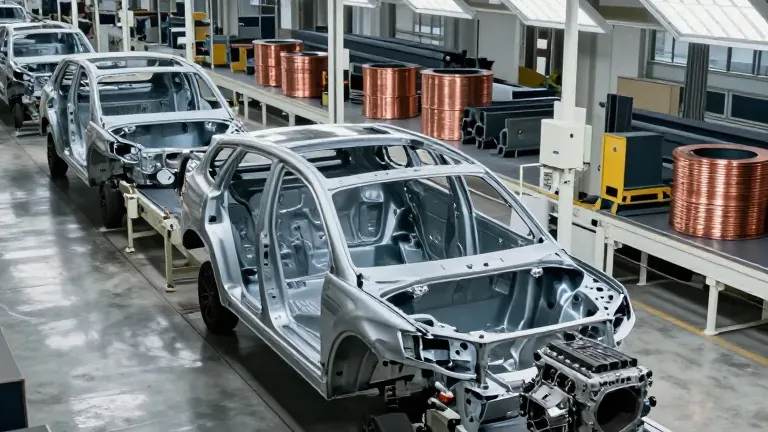
The third quarter earnings reports from American automakers reveal a divided industry where top-line revenue is climbing but production costs are rising sharply.
General Motors and Ford each forecast that higher prices for computer chips, diesel fuel, and raw materials will cost them approximately $2 billion this year. GM’s chief financial officer, Paul Jacobson, stated that the company is also still paying about $2.5 billion in tariff costs, a figure lower than earlier estimates due to refunds. Ford’s chief executive, Jim Farley, confirmed that commodities, memory, and logistics costs represent a similar year-over-year headwind for the company.
Despite these cost pressures, sales of large vehicles remain robust. General Motors reported that light-duty truck sales rose 9% over the past year, while Stellantis saw U.S. pickup sales jump 34%. Ford’s F-Series continues to serve as a bestseller. Overall revenue increased by 2.9% at GM, 2% at Ford, and 1% at Stellantis. Sherry Ann House, Ford’s chief financial officer, noted that customers have remained resilient despite higher fuel prices and interest rates, with the average new vehicle transaction price reaching just over $50,000 in September.
The rising costs stem from several converging factors. Tariffs imposed since 2025 have increased the price of imported steel, aluminum, and copper. Copper costs are also driven by global demand for electric vehicle batteries and data center wiring. Computer memory chip prices have surged due to tight supply chains and demand from the artificial intelligence sector. Logistics costs have risen as well, with the average price of diesel fuel hovering near $6.35 per gallon. This high fuel cost impacts the shipping of parts across the U.S.-Canada border, where supply chains often cross the line multiple times during manufacturing.
The electric vehicle sector is undergoing a shift following the expiration of the $7,500 federal tax credit in September 2025. GM reported a 6% drop in overall sales partly due to the smaller EV market, though the company plans to continue making electric vehicles while aligning production with demand. Ford executives highlighted their upcoming Fathom electric truck, which is expected to be available for pre-order in early 2027 at a price under $30,000. While EV sales have leveled out at about 6% of new car sales in the U.S., hybrid sales have grown 27% in the past year as consumers seek fuel efficiency.
Tesla has regained a dominant position in the U.S. electric market, capturing nearly 52% of new EV sales this year. Ivan Drury, director of industry insights at Edmunds, attributed this shift to other automakers reducing their EV investments. Meanwhile, Tesla CEO Elon Musk indicated that special committees at Tesla and SpaceX are discussing a potential merger, noting that shareholders would need to support such a move.
Analysts suggest the industry is adjusting to a slower transition toward fully electric vehicles. Sam Fiorani, a vice president at Auto Forecast Solutions, expects the Detroit automakers to offer more hybrid vehicles in coming years, noting that the shift to electric is taking longer than initially anticipated.
Source: WLRN
More Business · Rip-Off Report · Report a business · Got a Story?