Fifteen-Year-Old Develops Tomato That Tastes Like Beef
Gabriella Rothberg’s startup, Impossible Vines, aims to engineer plants that produce heme, a molecule responsible for savory meat flavors.
By Rosa Kovalenko ·
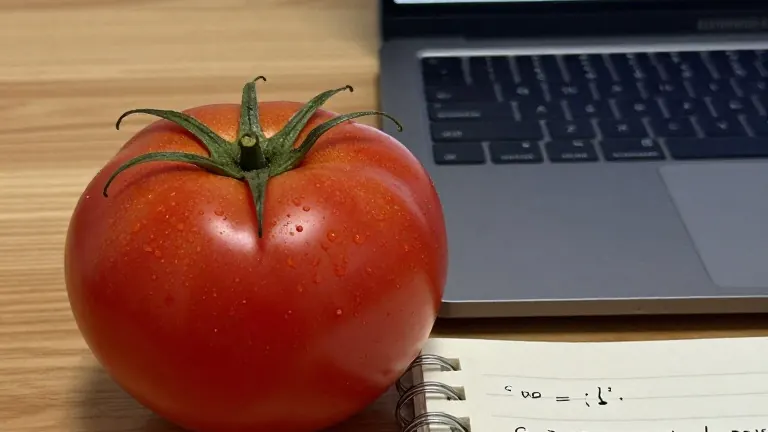
A fifteen-year-old entrepreneur has secured a U.S. patent for a genetically modified tomato designed to taste like beef. Gabriella Rothberg, the founder of Impossible Vines, announced that her team has produced a transformed plant currently undergoing testing. The project seeks to introduce heme, a molecule associated with the savory flavor of meat, into standard tomato varieties.
The concept originated from a casual interaction between Rothberg and her father, a self-described carnivore. Rothberg prepared a vegetarian tomato sandwich for him, and after he took a bite, he expressed surprise at how much he enjoyed the meal. When he asked about the specific variety of tomato used, Rothberg replied that it was a beefsteak tomato. The name triggered a line of inquiry: what if the vegetable itself could mimic the flavor profile of beef?
Rothberg began developing this idea during her high school years, combining her passion for cooking with scientific research. She collaborated closely with Maddison Marshall, a Ph.D. student at the University of Miami, who helped plan their laboratory work. Mentors and faculty advisors at the university supported the project, connecting the teenage founder to academic resources. Rothberg described her initial role as a young person with a dream that required extensive time management.
For the first eighteen months, Rothberg balanced a full school day, crew practice ending at 7 p.m., and laboratory work that continued until 10:30 p.m. on four days a week. Progress was initially slow. The team spent months watching their plants die before identifying an error in their growth medium. Once they corrected the specific ingredient, the plants began to thrive. The breakthrough transformed a process that had stalled for months into one that showed visible results in days and weeks.
Artificial intelligence has played a central role in scaling the company’s operations. Rothberg uses AI tools to assist with gene construction, laboratory calculations, patent filings, and business planning. She noted that the technology allows a small team to accomplish tasks that would typically require a much larger workforce. However, she emphasized that AI cannot perform the physical experiments, which remain a manual process for the team.
Rothberg’s vision extends beyond flavor. She is investigating the relationship between heme and iron intake. Her goal is to create a crop that offers nutritional benefits in communities where raising livestock is difficult or inaccessible. She cited the ease of growing a tomato in a backyard compared to maintaining a ranch with cows. Her long-term objective is to place these tomatoes on grocery store shelves, offering shoppers a choice between a regular tomato and one that tastes like a hamburger.
The company documents its progress on Instagram and X under the handle @impossiblevines. Rothberg continues to post updates on the experiments and the development of the plant. While the product is not yet available to consumers, the team holds the patent and continues to test the transformed plant in their laboratory.
The next steps involve further testing of the current plant variety. Rothberg is working to refine the growing process and ensure the flavor profile meets her standards before seeking wider distribution. The project remains in the development phase, with the grocery aisle as the final destination.
Source: The Miami Hurricane
More Business · Rip-Off Report · Report a business · Got a Story?