New Center Opens for Haitian Deportees
A three-story facility in Cap-Haïtien provides shelter and basic supplies for immigrants returning from the United States following the loss of temporary protected status.
By Rosa Kovalenko ·
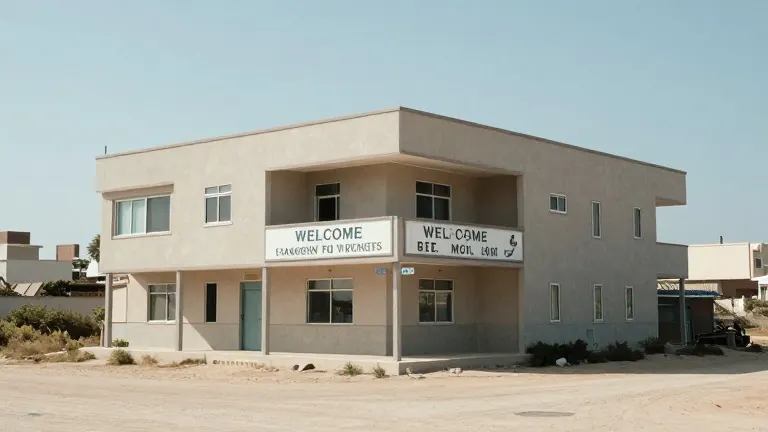
Immigrants arriving in Haiti after deportation from the United States now have a dedicated facility in Cap-Haïtien to receive immediate aid. The Centre D’Accueil-Bedrock, a three-story building located near a dirt road in the coastal city, opened its doors to provide meals, hygiene kits, and temporary lodging for those who often arrive with little more than the clothes on their backs.
The opening follows a sharp increase in removal flights driven by shifts in U.S. immigration policy. In June, the Supreme Court permitted the Trump administration to revoke protections for at least 330,000 Haitians nationwide. Temporary protected status officially lapsed on July 27, leaving roughly 19,000 individuals in Massachusetts without legal standing. Since August 20, the frequency of removal flights to Haiti has escalated from one per month to one per week, according to data from the Human Rights Watch ICE Flight Monitor.
The new center began operations last Wednesday, one day before the latest scheduled deportation flight. Before this week, a formal protocol with local authorities did not exist for transporting deportees to the facility. Staff instead visited the local police station where returned immigrants are processed. There, they distributed emergency packages containing toothbrushes, towels, and other essentials to more than 100 individuals. This week marks the first time the center will coordinate with Haiti’s Office National de la Migration to transport a group directly to the building.
Currently, the Haitian government funds one night at a local hotel for some deportees, but not all can be accommodated, and those who are must leave by 11 a.m. the following day. Dr. Geralde Gabeau of the Immigrant Family Services Institute in Mattapan noted that Cap-Haïtien previously lacked infrastructure to support these returnees. She described the current situation of overcrowding and continued deportations as adding gasoline on top of fire.
The facility can currently host 56 individuals per night and is seeking additional bunkbeds to increase capacity. Gabeau stated that the project has cost at least $100,000 so far. A coalition of partners, including Ayiti Home Link, United For Women Empowerment, the Fondation Alfred Beliard, and the AmCham’s Women Network, is supporting the effort. Caseworkers at the center help individuals reconnect with family and friends, a task complicated by the fact that many deportees arrive without cell phones.
Dr. Guerda Nicolas, a clinical psychologist at the University of Miami and co-founder of the mental health nonprofit Rebati Sante Mentale, visited the center last week. She met several individuals from the recent flight, including an elderly man who was completely blind, a person with bipolar disorder in a mental health crisis, and a young man who had been in the U.S. foster care system and had not visited Haiti since he was two years old. Another young man attempted to make a phone call but did not have a device.
The State Department continues to list Haiti as a Level 4, or do not travel, destination for Americans despite the rising volume of deportations. The center aims to allow individuals to stay for several days while they arrange reintegration support. Workers also provide guidance on safe areas in the capital, which remains under significant gang control.
Washington is currently seeking to expand deportation operations to include the capital, Port-au-Prince. The center will continue to add staff to manage the growing influx of returnees.
Source: WLRN