India-EU Defense Pact: Maritime Focus Amid Strategic Divisions
New Delhi and Brussels have signed a Security and Defense Partnership, but experts warn that differing views on Russia and China limit the alliance's reach in the Indo-Pacific.
By Rosa Kovalenko ·
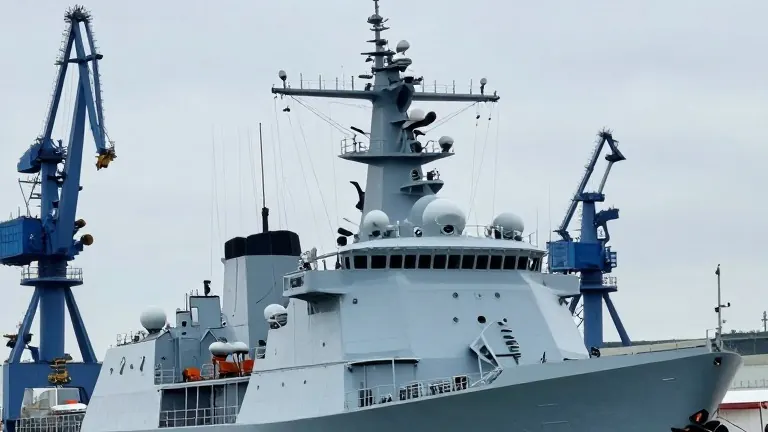
India and the European Union signed a Security and Defense Partnership in January 2026, establishing a formal framework for military cooperation. The two sides held their first official Security and Defense Dialogue in March. Their fifth Maritime Security Dialogue took place in Brussels in September. Despite these recent steps, analysts say the alliance faces structural hurdles that prevent a unified front in the Indo-Pacific.
The partnership aims to strengthen maritime security and share defense technology. However, India and European nations hold different priorities on the global stage. India seeks to diversify its defense supplies and expand its global economic influence. The EU seeks to secure a larger role in Indo-Pacific security while dealing with crises closer to home.
Mohan Kumar, a former Indian ambassador to France, noted that Europe can serve as a credible defense partner for India, particularly in the maritime theater. He observed that European distractions, such as the conflict in Ukraine, limit the bloc's capacity to expand its role in the region. France stands out as a key partner due to its military presence on Reunion Island and Mayotte. Javed Ashraf, another former Indian diplomat, described France as a strong and consistent security partner across the full spectrum of defense cooperation.
Tara Kartha, a former member of India's National Security Council Secretariat, pointed to political differences among EU members as a primary obstacle. During the EU summit in Brussels on October 15 and 16, leaders reaffirmed support for Ukraine but displayed disagreements over funding and national priorities. These internal divisions make it difficult for Europe to act as a cohesive entity in Indo-Pacific security.
As a result, much of the cooperation between New Delhi and Europe occurs at the national level rather than the bloc level. Germany, Spain, Italy, and Poland have all become important partners for India. Ashraf said Brussels could support these bilateral ties by providing access to EU-funded programs in maritime security, space, and critical minerals. He added that India is becoming an important source of defense supplies for a re-arming Europe.
The relationship is complicated by India’s reliance on Russian equipment and technology. European governments have been in a tense standoff with Russia since its 2022 invasion of Ukraine. Gulshan Sachdeva, a professor of European Studies at Jawaharlal Nehru University in New Delhi, said that integrating India's defense industry into the European value chain is challenging as long as Russia remains Europe's principal security concern. Buying major items like Rafale fighter jets from France or submarines from Germany is easier than deep industrial integration.
China presents another layer of complexity. India views China as a rival with an ongoing border dispute. The EU designates China as a systemic rival, but its members differ on how to balance security concerns with economic relationships. These diverging views make it difficult to develop a shared assessment of Indo-Pacific threats. India wants partnerships that strengthen its capabilities without requiring full alignment with another power's strategic priorities.
The new partnership does not amount to a joint security commitment. Ashraf said the two sides could strengthen mutual capabilities but were unlikely to exercise a visible influence on the global security order. Maritime domain awareness, information sharing, and selective industrial cooperation offer more realistic prospects than a common security role across the Indo-Pacific.
Source: Deutsche Welle