Grant Covers 30% of Service Dog Training for 10 Veterans
A private donor fund will subsidize the cost for veterans in St. Louis, while James Poggi prepares to return to his crossing guard duties with his Goldendoodle.
By Rosa Kovalenko ·
A private donor grant will pay for 30% of the service dog training costs for 10 veterans or active military members in the St. Louis area. The fund, managed by Dog Training Elite St. Louis, aims to offset the financial barrier for service members who need canine assistance for physical or mental health needs.
Matt Willis, the owner of the training facility, said the grant divides the donated money so that it can help ten individuals in need. He noted that the system currently has gaps in caring for veterans who have experienced trauma both physically and emotionally. Willis stated that the chemical changes in the body resulting from interaction with a dog provide a necessary uplift for these service members.
James Poggi, a former Marine Corps aviation worker, is one of the veterans utilizing such services. His military service resulted in five back surgeries and a below-the-knee amputation. Poggi attributed these injuries to multiple accidents, hard landings, physical training mishaps, a car crash, and a case of spinal meningitis sustained while he was still active duty.
Poggi described his transition from a 6-foot-3, 250-pound service member to a person reliant on wheelchairs, walkers, and other mobility devices. His wife and caregiver suggested he get a service dog to ease the emotional toll of these limitations. He now works with Teddy, a Goldendoodle who handles daily tasks such as retrieving dropped keys and cell phones.
Poggi said the dog helps him regain his independence by performing tasks that many people take for granted. He compared the relationship to having a battle buddy who always has his back. Poggi also noted that Teddy brings back a sense of joy that he described as comparable to the bond he has with his children.
Teddy is trained at Dog Training Elite, where Willis said the facility creates real-world scenarios rather than relying solely on book learning. The training covers basic obedience, advanced therapy, protection, and service work. Willis emphasized that the dogs are prepared for experiences that veterans will encounter outside of the training environment.
A 2024 study found that service dogs are associated with lower rates of anxiety and depression in veterans with PTSD. A separate 2024 survey of about 600 veterans revealed that about four in 10 had never had a PTSD service dog but would like one. The VA does not currently provide service dogs for mental health conditions and is still studying the potential benefits of such interventions.
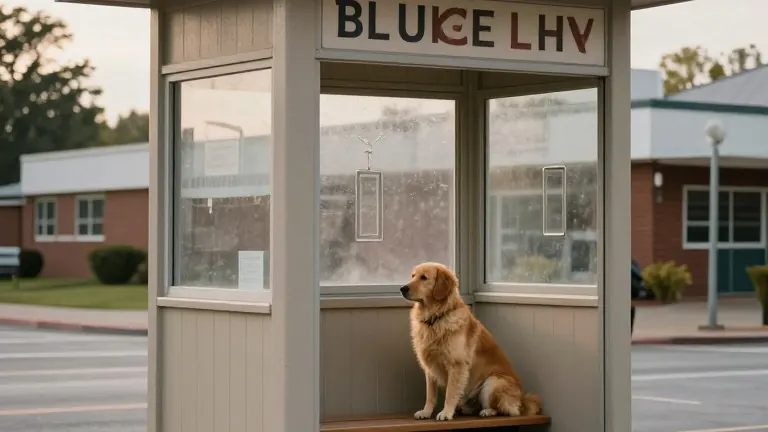
Poggi is set to return to his job as a school crossing guard in Mascoutah. He plans to work full-time at his corner every day, rain or shine, with Teddy by his side in a small crossing guard hut.
Source: WWSB