Canada signs trade pact with UAE, opens extradition talks
Ottawa agrees to a deal that will double bilateral trade and eliminate tariffs on over 99 percent of exports, while also negotiating a new extradition treaty and military cooperation framework.
By Rosa Kovalenko ·
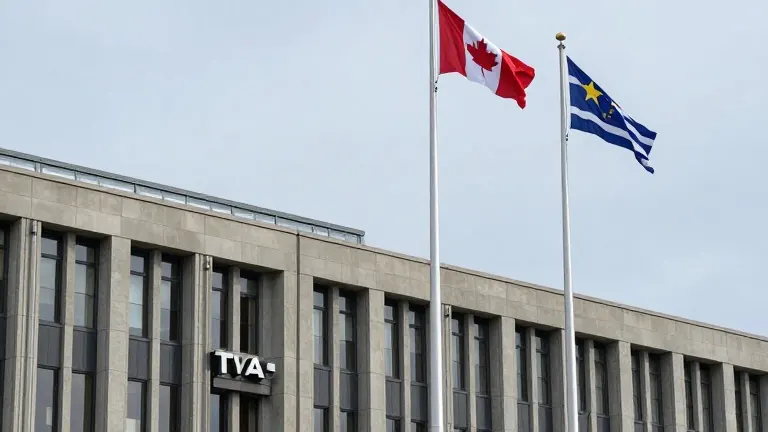
Canada and the United Arab Emirates announced on Tuesday the signing of a comprehensive free trade agreement. The deal, known as the Canada-UAE Comprehensive Economic Partnership Agreement, was negotiated in a record 47 days for either nation. Prime Minister Mark Carney stated that the pact will reduce or eliminate tariffs on more than 99 percent of Canadian exports to the UAE beginning next year. He cited specific benefits for producers of pulses, canola, industrial machinery, power generation equipment, and aerospace components.
The agreement follows a two-day visit to Ottawa by Emirati Crown Prince Khaled bin Mohamed bin Zayed Al Nahyan. It marks the first time an Emirati crown prince has visited the Canadian capital. During the meeting, the two leaders also opened formal negotiations on an extradition treaty. This new framework would allow Abu Dhabi to request the handover of individuals accused of committing crimes.
Beyond trade, the governments signed a memorandum of understanding to establish a Joint Military Committee. This body will oversee military education, training, joint exercises, cybersecurity, and information exchanges. Carney said the talks delivered substantial progress on a $50 billion investment pledge made by the UAE a year ago. That pledge was for investment in Canadian energy and development projects, with a specific focus on the Arctic.
Maninder Sidhu, Canada's minister of international trade, said the deal will expand two-way trade from $2.4 billion to nearly $5 billion over the next decade. He noted that the agreement grants Canadian firms greater access to the UAE's $500 billion economy. The expansion aligns with Carney's strategy to diversify Canada's economic partnerships as relations with the United States have deteriorated.
Carney declared the traditional Canada-US relationship "over" in May 2025. US tariffs introduced in March 2025 imposed a 25 percent tax on most Canadian goods and a 10 percent tax on energy. Carney's statement said Canada now has preferential access to 1.5 billion consumers across 16 free trade agreements and 51 countries. This includes a recent agreement with China to lower tariffs on Canadian canola oil to 15 percent, while Canada accepts 49,000 Chinese electric vehicles.
The new UAE pact is part of a series of recent diplomatic moves. Carney visited Doha in January and Saudi Arabia in July, where he secured 13 commercial agreements and memorandums of understanding worth $700 million. He also visited Turkey last week, where talks began on a Canada-Turkey free trade agreement. In September, Kuwait and Canada signed a defense and security memorandum of understanding.
Stuart Trew, director of the Trade and Investment Research Project at the Canadian Centre for Policy Alternatives, criticized the strategy. He told Middle East Eye that the Emiratis are effectively using the $50 billion investment pledge to pressure Ottawa. "It looks like Canada is willing to agree to basically anything to try and get that money," Trew said. He questioned the logic of an extradition treaty with a state he described as a paranoid surveillance state.
Trew also raised concerns about the defense cooperation deal. He accused the UAE of fomenting war and rights violations across Africa. Rights groups and correspondents have reported evidence that the UAE finances the Rapid Support Forces in Sudan's civil war. The RSF stands accused of genocide, though the UAE denies any involvement. Trew called the government's approach a confusing strategy, arguing that it identifies the wrong crisis and exaggerates the need for foreign funding. He noted that automobiles remain Canada's second biggest goods export after energy, and that nothing can fully replace the US trade relationship.
Source: Middle East Eye