San Antonio artist conceals 1942 gate lettering at Japanese Tea Garden
A new faux bois panel hides the words 'Chinese Tea Garden' on a historic entrance while preserving the original concrete artwork.
By Aminata Patterson ·
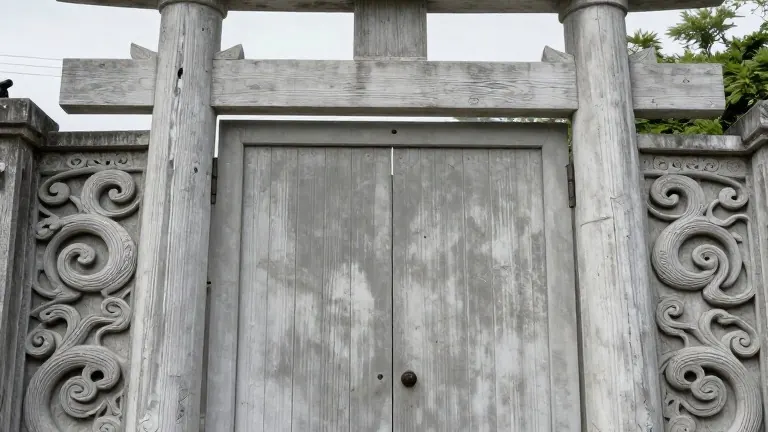
Artist René Romero completed a concrete panel that covers the original lettering on the entrance gate of San Antonio’s Japanese Tea Garden. The new piece, crafted in the local faux bois style, masks the words 'Chinese Tea Garden' that have sat on the structure since its construction in 1942. This modification resolves a decades long dispute over the park’s naming and the treatment of its original Japanese American owners.
The gate, modeled after a traditional Japanese torii gate, was created by artists Dionicio Rodríguez and Maximo Cortés in 1942. It is sculpted from concrete to resemble wood, a technique known as faux bois. When the gate was first built, the city had just renamed the park the Chinese Tea Garden following the eviction of the Japanese American Jingu family after the attack on Pearl Harbor. The Jingu family had operated a business at the site for years before being displaced by anti Japanese sentiment during World War II.
The Wu family, a Chinese American group that had been friends with the Jingu family, took over the business operations. The city changed the park’s name to reflect the new management, and the newly installed gate displayed the name 'Chinese Tea Garden.' The Jingu family eventually relocated to California. In 1984, San Antonio officials restored the park’s original name, the Japanese Tea Garden. However, the physical lettering on the gate remained unchanged for four decades.
Removing the original lettering would have altered a historic artwork. San Antonio Parks Foundation CEO Mary Jane Verette noted that the gate is a signature piece of the park and a masterwork of the faux bois technique. 'We have to acknowledge the complex histories of our public parks, and then we have to move on and learn from it, and to grow from it,' Verette said. The city needed a solution that honored the restored name without destroying the physical history of the structure.
Romero, who learned the craft from Carlos Cortés, designed a concrete cover that fits over the old letters. 'I had to do like a cover for the name, the Chinese Tea Garden,' Romero said. The panel is constructed from rebar and cement to mimic the appearance of a wooden plank. It sits flush against the gate, rendering the 1942 lettering invisible to visitors while keeping the original concrete intact underneath.
Verette emphasized that preserving the original letters was a priority. 'I don't think we would ever want to take those letters down anyway, because they are part of the piece of art,' she said. The new addition allows the entrance to display the correct name of the garden without erasing the physical evidence of the park’s mid 20th century history.
Source: Texas Public Radio