Alberta Voters Back Limits on Newcomers' Services as Migrant Workers Voice Alarm
An Alberta referendum this week is expected to endorse restricting some newcomers' access to healthcare, education and social support, even as the province relies on workers from abroad.
By News Media House Staff ·
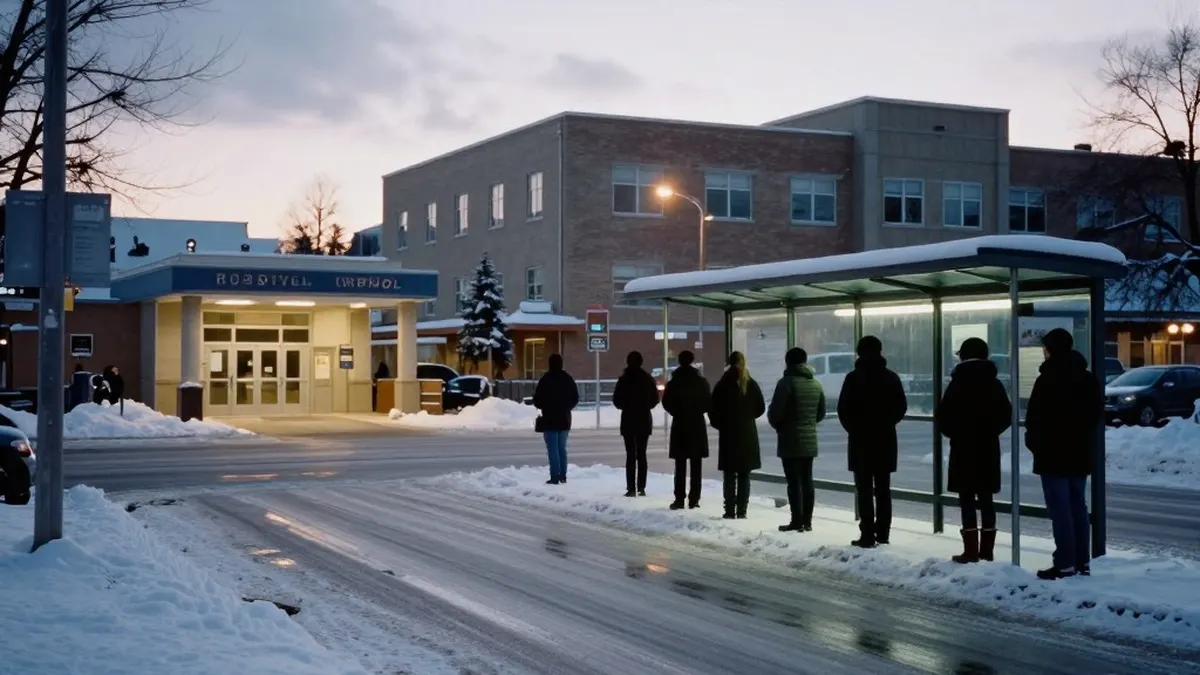
Alberta held a referendum this week that asked residents about the province's place in Canada and about how far it should go in limiting some newcomers' access to public services. Unofficial results indicate that the separation question and the constitutional reform question will both fail, while the questions on immigration are likely to pass.
One question asked whether the government should bring in a law ensuring that only Canadian citizens, permanent residents and "individuals with an Alberta-approved immigration status" can use healthcare and education. Another asked whether newcomers should have to live in the province for 12 months before qualifying for certain social support programs, and whether the province should be able to charge some temporary residents fees for healthcare and education.
The vote has exposed a tension in provincial policy. The governing United Conservative party has invested in recruitment and expanded its provincial immigration nomination targets to ease labour shortages. Yet it now wants to limit services for some of the same workers. The party blames rapid population growth for overcrowded and underfunded hospitals and schools. Critics argue that restricting access could leave workers and their families more vulnerable without tackling the root causes.
Earlier this year, Premier Danielle Smith pointed to the immigration policy of Justin Trudeau's Liberal government as the source of strain in classrooms, emergency rooms and social support systems. In a social media post, she wrote: "For every $1 of taxes a guest worker generates, taxpayers are covering $10 in services. This is not sustainable." The federal government has since trimmed immigration targets and tightened its temporary foreign worker program amid criticism that large companies were abusing it. Alberta's economy still depends on workers from abroad in sectors such as agriculture, food services and tourism.
Vanesa Ortiz, a teacher who arrived in Calgary from Mexico a decade ago and works with the non-profit Asociación de Mexicanos en Calgary, said the questions struck close to home. "That was my daughter's education. That was my family's healthcare," she said. She fears growing skepticism toward migrant workers will push them into the shadows and make them easier to exploit, noting that thousands of farm workers in the province already lack healthcare. "Scapegoating non-permanent residents is not going to lower the cost of living," she said.
The province says temporary residents, who make up almost 6% of Alberta's population, contribute roughly $150m in tax revenue but cost more than $1bn a year in health, education and other services. Ximena González, a Calgary-based writer who arrived 16 years ago as an international student, says there is no data to support that claim. Economist Gillian Petit noted that temporary residents also pay taxes to the federal government, which help fund Alberta's healthcare. She said that if they contribute less overall, it is because they earn less than the median resident, and that they are also less likely than the average Albertan to use healthcare and education.
González said she would not choose to stay if she were a temporary resident today. "I would not feel wanted, and I don't want to be treated like a third-class citizen," she said. She also argued that media attention on the fringe independence movement left the other questions with little scrutiny and voters poorly informed.
Economist Jim Stanford said hundreds of thousands of residents skipped the immigration questions and answered only the one on separation. "This cannot remotely be interpreted as a mandate for the government to crack down on immigration," he said, adding that the province cannot act "unilaterally" on the proposals. He described the exercise as symbolic and ideological, one that lends legitimacy to nativist sentiment on the far right of Alberta politics.
Ortiz called the shift a "betrayal" of people who have helped build the province. "They are not just labour. They work, study and raise their children here," she said, adding that they need to know they can build a life with dignity and respect.
Source: The Guardian