Ukraine Moves Toward Its Own Satellite Network With Nokia and ICEYE After Starshield Throttling
Ukraine's military has signed a letter of intent with Finland's Nokia and ICEYE to explore a sovereign satellite-communications system, days after reports of restricted Starshield speeds.
By News Media House Staff ·
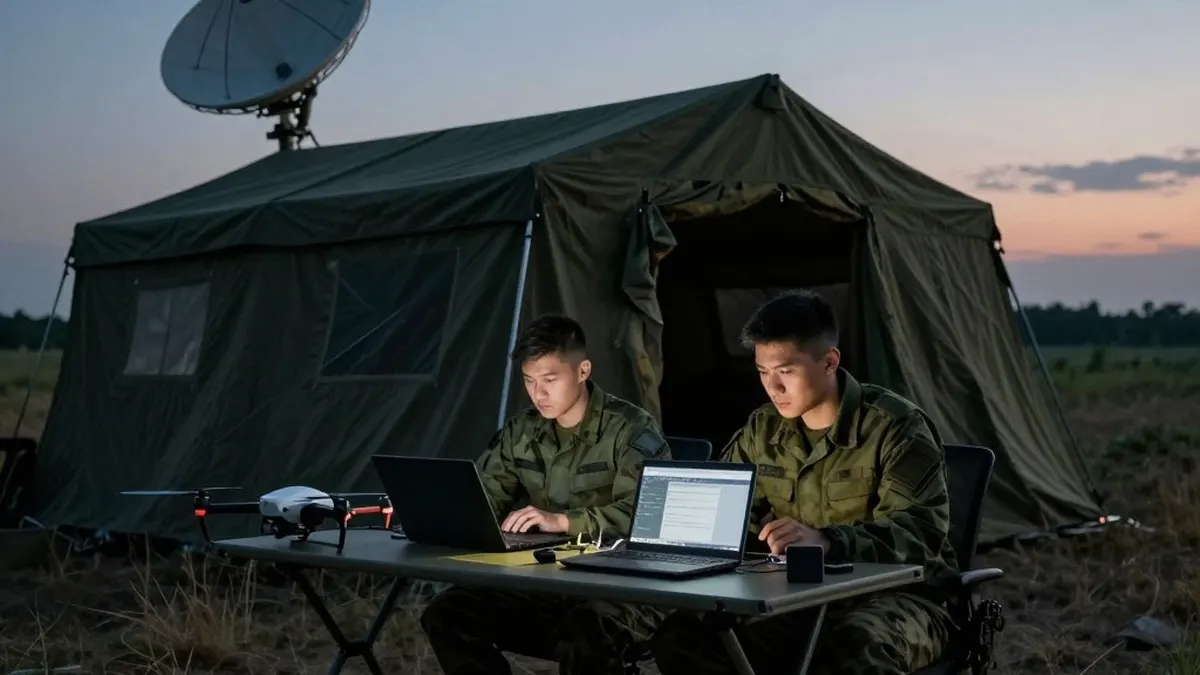
Ukraine's military has signed a letter of intent with two Finnish companies, telecom group Nokia and satellite maker ICEYE, to study the creation of a sovereign satellite-communications network. The agreement was announced on Oct. 22 and comes little more than a week after Ukrainian forces reported disruptions to a service they depend on heavily.
ICEYE cofounder and CEO Rafal Modrzewski said in a statement that "Ukraine needs secure, sovereign and high-performance satellite communications systems that it controls." He added that ICEYE has a record of delivering sovereign missions quickly, has supported Ukraine since 2022, and remains committed to doing so.
Satellite-based communications and data are central to how Ukraine defends itself against Russia, which invaded in February 2022 and continues to attack with ground troops, missiles and drones. Ukraine, however, does not own the satellites it relies on. It mainly uses SpaceX's Starlink constellation in low Earth orbit, along with Starshield, a military-grade, jamming-resistant version of Starlink used by the U.S. government and its allies.
Starshield is particularly important because it lets Ukraine operate fast-moving drones over long distances in war zones, a form of warfare in which the country has become highly skilled for both offensive and defensive purposes. On Oct. 14, Ukrainian soldiers and officials reported severe throttling of their Starshield access, effectively a speed limit on drones carrying terminals, which caused many of them to fall from the sky.
Who ordered the restriction is not entirely clear. Some U.S. officials have reportedly said the order came from Elon Musk, but the SpaceX founder and CEO placed responsibility with the Trump administration. "Starshield systems are owned and controlled by the US government. Any limits on speed or usage are decided by the US military and ultimately POTUS," Musk wrote on X on Oct. 14. The throttling is apparently still in effect.
Whoever made the decision, Ukraine was not the one making it, and the episode has likely strengthened its wish to control its own satellite-communications infrastructure. Mikko Hautala, Nokia's chief geopolitical and government relations officer and chairman of Nokia Defense, said nations need communications they can rely on in every situation, and that satellite networks extend and protect connectivity when ground networks are disrupted. Through the letter of intent, he said, Nokia, Ukraine and ICEYE will explore how trusted, sovereign satellite communications can strengthen Ukraine's resilience and give it control over the connectivity it depends on.
The deal builds on an earlier agreement. Nokia and ICEYE announced on Oct. 1 that they would work together to help countries develop sovereign satellite-communications systems.
ICEYE is already part of Ukraine's defense effort. The company and its U.S. subsidiary jointly operate a fleet of Earth-observing satellites in low Earth orbit that use synthetic aperture radar, and Ukraine draws on that data for intelligence and planning.
That relationship appears to have drawn Russian attention. A Russian inspector satellite, Kosmos 2612, recently made an extremely close approach to ICEYE-X36, which is operated by ICEYE US. The purpose of the unsanctioned rendezvous is unclear: Russia may have wanted to assess the satellite's capabilities or interfere with it, or it may have intended to signal that it could interfere with satellites if it chose to.
Source: Space.com